
Blog

What Does the Bible Say About Non-Denominational Churches?
Explore what Scripture says about non-denominational churches, biblical truth, church unity, Jesus Christ and the foundation of Christian faith.
Key Takeaways
The Bible does not use the modern term non-denominational church, but it clearly teaches what the church should believe and how it should live.
Scripture places the focus on Jesus Christ, the gospel, the authority of God’s Word, and the unity of believers.
A healthy church is not defined first by a label, but by whether it is faithful to biblical truth.
Non-denominational churches can reflect biblical Christianity when they are rooted in Scripture and centered on Jesus.
The most important question is not only what a church is called, but whether it teaches and lives out God’s Word faithfully.
A Question Many People Ask
Many people today are curious about church labels. Some grew up in a denomination and are now exploring something different. Others are completely new to church and want to understand what all the terms mean. That is why people often ask, what does the bible say about non denominational churches?
It is an understandable question. The phrase “non-denominational” sounds modern, while the Bible was written long before denominations existed in the way we think of them today. So the Bible does not directly mention Baptist, Methodist, Presbyterian, Lutheran, or non-denominational churches by name. But it does say a great deal about what the church is, what it should believe, and how it should function.
At Grace Community Church, we believe this is the most helpful place to start. Instead of asking only what category a church fits into, we should ask what Scripture says the church should be. When we do that, we begin to see that the Bible’s main concern is not labels. Its concern is truth, faithfulness, unity, and devotion to Jesus Christ.
The Bible Does Not Use the Term “Non-Denominational”
The first thing to say clearly is this: the Bible does not use the phrase non-denominational church. That term developed much later in church history. So if someone asks, what does the bible say about non denominational churches, the honest answer is that it does not address the modern label directly.
However, that does not mean the Bible is silent on the issue. It tells us what kind of church honors God. It shows us what church life looked like in the early Christian community. It reveals what believers are to teach, how they are to live, and what should hold them together.
That means the real biblical question is not, “Does the Bible mention non-denominational churches by name?” The real question is, “Does a church reflect biblical truth and the heart of the gospel?”
The Bible Defines the Church by Its Foundation
In Scripture, the church is not defined by branding, structure, or denominational identity. It is defined by its foundation. The church belongs to Jesus Christ. He is the head of the church, and the people of God are called to gather around Him.
This is an important starting point when asking, what does the bible say about non denominational churches. The Bible shows that the church is built on:
Jesus Christ as Lord
The gospel as the message of salvation
The Word of God as truth
The Holy Spirit as the source of life and power
Believers united together in faith
So while non-denominational churches may not be named in Scripture, any church that is truly biblical must be built on these same foundations.
Jesus Christ Is the Center of the Church
One of the clearest themes in the New Testament is that Jesus Christ stands at the center of the church. The church exists because of Him. It is His body, and He is its head.
This means that when people ask, what does the bible say about non denominational churches, the most important biblical answer is this: any faithful church must be centered on Jesus.
That includes believing:
Jesus is the Son of God
Jesus died for sin
Jesus rose from the dead
Jesus is the only Savior
Jesus is Lord over His church
A church may use the term non-denominational, but if it is not centered on Jesus, it is missing the most important biblical mark of a healthy church.
The Bible Emphasizes Truth, Not Labels
The New Testament places strong emphasis on sound doctrine. That means correct teaching matters. The early church was repeatedly urged to guard the truth, remain faithful to the apostles’ teaching, and reject false teaching.
This matters when considering what does the bible say about non denominational churches. Scripture does not teach that churches should be casual about belief. It teaches that truth matters deeply. The gospel is not something to reshape according to trends or preference.
So the question should never be only whether a church is denominational or non-denominational. The better question is:
Does it teach the Bible faithfully?
Does it proclaim the gospel clearly?
Does it honor Jesus as Lord?
Does it call people to repentance and faith?
Does it show love, holiness, and obedience?
The Bible leads us to evaluate churches by truth, not by title alone.
The Early Church Was United Around the Gospel
The early church did not operate with the same denominational divisions people see today. Instead, believers gathered around shared faith in Jesus Christ, the teaching of the apostles, prayer, fellowship, and worship.
This is important for answering what does the bible say about non denominational churches. In many ways, the desire of healthy non-denominational churches is to focus on those central biblical truths without identifying primarily with a later denominational structure.
The early church was marked by:
Devotion to biblical teaching
Fellowship among believers
Breaking bread together
Prayer
Generosity
Shared mission
These patterns still matter. A non-denominational church can reflect the spirit of the early church when it is committed to these same biblical priorities.
Unity Matters to God
One concern some people have is whether non-denominational churches weaken Christian unity. But the Bible teaches that real unity is not based first on organization. It is based on truth and shared life in Christ.
The New Testament repeatedly calls believers to humility, love, peace, and unity. Christians are one body in Christ, even though they may come from different places, backgrounds, and traditions.
So when asking, what does the bible say about non denominational churches, it helps to remember that the Bible values unity rooted in Christ. A non-denominational church should not promote isolation, pride, or independence for its own sake. It should seek biblical unity with all true believers while remaining faithful to God’s Word.
The Bible Calls Churches to Faithful Leadership
The New Testament also teaches that churches need godly leadership. Elders, pastors, and other leaders are called to shepherd God’s people with humility, wisdom, and integrity.
This means a biblical church is not simply defined by its independence. It is defined by whether it is led well according to Scripture. A healthy non-denominational church should still have:
Qualified spiritual leaders
Accountability
Clear biblical teaching
Pastoral care
A commitment to truth and holiness
So again, the Bible does not ask first whether a church fits a denominational category. It asks whether the church is led according to God’s design.
The Bible Warns Against Division and Pride
Another important biblical theme is the warning against division, pride, and loyalty to human leaders over Christ. The apostle Paul addressed believers who were becoming too attached to different teachers and groupings, and he reminded them that Christ alone is supreme.
This has strong relevance when thinking about what does the bible say about non denominational churches. The Bible warns against making any human identity more important than the gospel. A church should not be centered on a personality, a label, or a style. It should be centered on Christ.
This can be a strength of a healthy non-denominational church when it genuinely seeks to keep Jesus and Scripture at the center rather than placing its identity in a human tradition. But it can also be a danger if “non-denominational” becomes a source of pride in itself. The biblical goal is always humility and faithfulness.
What the Bible Says Matters Most in Practice
When people ask, what does the bible say about non denominational churches, they are often really asking, “Can a non-denominational church be biblical?” The answer is yes, if it is grounded in Scripture and faithful to the gospel.
A healthy church, whether denominational or non-denominational, should:
Teach God’s Word clearly
Proclaim salvation through Jesus Christ
Practice prayer and worship
Encourage Christian fellowship
Care for families, children, and the vulnerable
Call believers to holiness and discipleship
Serve others in love
Point people to Christ in every season of life
The Bible’s focus is always on faithfulness, not labels.
How This Connects to Grace Community Church
At Grace Community Church, we are a non-denominational church, but our desire is not simply to avoid a label. We desire to be faithful to Scripture. We want to teach the Bible clearly, keep Jesus at the center, build strong Christian community, and help people grow in faith in practical ways.
That means we care deeply about:
Biblical teaching
Prayer
Worship
Children’s ministry
Youth gatherings
Community life
Serving others
Helping people follow Jesus in everyday life
When people ask, what does the bible say about non denominational churches, we want our answer to be more than a definition. We want our church life to reflect the biblical values of truth, grace, humility, and faithfulness.
Common Misunderstandings
There are a few common misunderstandings about non-denominational churches that are worth clearing up.
“Non-denominational means no doctrine”
That is not true of a healthy church. A faithful non-denominational church should have clear biblical beliefs and strong teaching.
“Non-denominational means modern or casual”
Style and atmosphere may vary, but the deeper issue is biblical faithfulness, not appearance.
“Non-denominational churches reject all church history”
A healthy non-denominational church should still value the historic truths of Christianity and learn from the wider church.
“Non-denominational churches can believe anything”
Again, that is not true if the church is rooted in Scripture. Biblical authority should shape what is taught and practiced.
FAQ: What Does the Bible Say About Non-Denominational Churches?
Does the Bible mention non-denominational churches directly?
No. The Bible does not use the modern term “non-denominational church.” That label came much later in church history.
What does the Bible say matters most about a church?
The Bible emphasizes faithfulness to Jesus Christ, sound teaching, unity in the gospel, godly leadership, and love among believers.
Can a non-denominational church be biblical?
Yes. A non-denominational church can be very biblical if it is centered on Jesus, grounded in Scripture, and committed to the core truths of the Christian faith.
Is non-denominational better than denominational?
The Bible does not present it that way. The key issue is not the label itself, but whether a church faithfully teaches and lives out God’s Word.
How should I evaluate a church?
Ask whether it teaches the Bible clearly, proclaims the gospel faithfully, honors Jesus as Lord, encourages prayer and discipleship, and reflects Christian love and truth.
Why does this matter for someone looking for a church?
Because beliefs shape everything else. Understanding what a church teaches helps people know whether it is a place where they can grow in truth, faith, and community.
So, what does the bible say about non denominational churches? It does not speak to the modern label directly, but it says a great deal about what the church should believe and how it should live. Scripture teaches that the church must be centered on Jesus Christ, rooted in God’s Word, faithful to the gospel, and marked by love, truth, and unity.
That means the most important question is not whether a church is denominational or non-denominational. The most important question is whether it is faithful to Scripture and centered on Christ.
At Grace Community Church, that is our desire. We want to be a church where people can ask questions, grow in biblical truth, and experience real Christian community. If you would like to learn more or plan a visit, explore Grace Community Church.
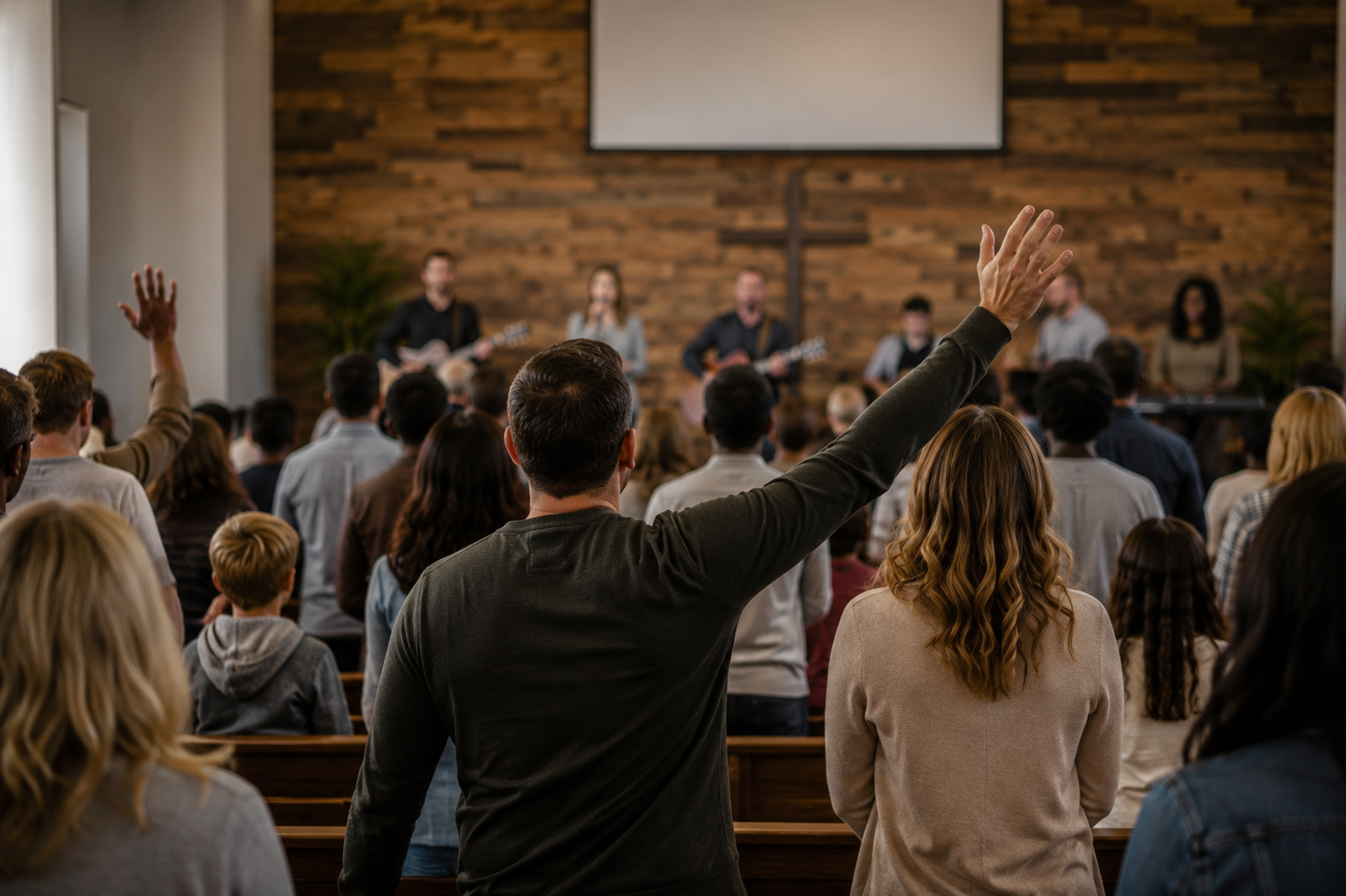
What Do Non-Denominational Churches Believe? Core Beliefs Explained
Learn the core beliefs of non-denominational churches, including the Bible, Jesus Christ, salvation by grace, baptism, communion and Christian community.
ey Takeaways
Non-denominational churches believe the Bible is the foundation for faith and daily life.
Jesus Christ is at the center of what non-denominational churches teach, worship, and practice.
Salvation is by grace through faith, not by earning God’s approval through good works.
Church is meant to be a community, not just a service, where people worship, grow, and serve together.
While churches may differ in style, most non-denominational churches share core Christian beliefs that have been held for generations.
A Common Question
Many people searching for a church ask the same question: what do non denominational churches believe? It is an important question, especially for someone who is new to church, returning after time away, or comparing different Christian traditions.
The phrase “non-denominational” can sound unclear at first. Some people assume it means a church has no real beliefs or no clear spiritual direction. Others assume it means a church is trying to be modern or different simply for the sake of being different. In reality, non-denominational churches are often deeply rooted in historic Christian faith. They simply are not formally connected to a larger denomination.
What “Non-Denominational” Means
A non-denominational church is a Christian church that does not officially belong to a larger denomination or church network with a formal governing structure. This does not mean it stands outside of Christianity. It means the church is not part of a specific denominational tradition such as Baptist, Methodist, Presbyterian, or Lutheran.
Even though non-denominational churches are independent in structure, most still hold to the same core Christian beliefs that have shaped the church for centuries. The word “non-denominational” speaks more to church organization than to whether a church has doctrine.
So when people ask, what do non denominational churches believe, the answer is usually not “something completely different.” In most cases, the answer is that they believe the historic truths of the Christian faith, while structuring their church life outside a formal denomination.
The Bible Is the Foundation
One of the clearest answers to the question what do non denominational churches believe is this: they believe the Bible is the Word of God and the main authority for faith and practice.
That means non-denominational churches generally teach that:
The Bible is trustworthy
The Bible reveals who God is
The Bible teaches people how to live
The Bible points clearly to Jesus Christ
The Bible should shape church teaching, beliefs, and daily life
At Grace Community Church, we believe Scripture is not just something to read occasionally. It is the foundation for teaching, worship, discipleship, and spiritual growth. Sermons, Bible studies, children’s ministry, youth gatherings, and prayer all flow from God’s Word.
Jesus Christ Is the Center
If you want the most important answer to what do non denominational churches believe, it is this: Jesus Christ is at the center of everything.
Non-denominational churches believe that Jesus is:
The Son of God
Fully God and fully man
The promised Savior
Crucified for our sins
Raised from the dead
The only way to salvation
Lord over all
This means Christianity is not mainly about rules, religious performance, or self-improvement. It is about Jesus. His life, death, and resurrection are the center of the gospel message. A non-denominational church may differ in worship style, ministry structure, or leadership model, but if it is grounded in historic Christian belief, it will keep Jesus at the center.
Salvation Is by Grace Through Faith
Another key part of answering what do non denominational churches believe is understanding what they teach about salvation.
Most non-denominational churches believe that people are saved by God’s grace through faith in Jesus Christ. That means salvation is not something we earn by good behavior, church attendance, or religious effort. It is a gift from God.
This belief includes a few important truths:
Every person is a sinner in need of forgiveness
Sin separates people from God
Jesus took the penalty for sin through His death on the cross
His resurrection shows His victory over sin and death
Anyone who places their faith in Jesus can receive forgiveness and new life
God Is One, Revealed as Father, Son, and Holy Spirit
Historic Christianity teaches that there is one God who exists eternally as Father, Son, and Holy Spirit. Most non-denominational churches hold firmly to this belief.
So when asking what do non denominational churches believe, this is another central answer:
God the Father is Creator and Lord
Jesus the Son is Savior and Lord
The Holy Spirit is God’s presence in believers, helping them grow, obey, and understand truth
The Trinity can be hard to explain fully because it is one of the deepest mysteries of Christian theology. But it remains one of the core beliefs shared by faithful churches across many traditions, including non-denominational churches.
The Church Is a Spiritual Family
Non-denominational churches usually place strong emphasis on the church as a living community, not only as a weekly event. This is another important answer to what do non denominational churches believe.
They believe the church is:
The body of Christ
A community of believers
A place for worship, learning, prayer, and service
A spiritual family where people grow together
A witness to the world through love and truth
At Grace Community Church, we believe church is not only about attending a service. It is about belonging to a community where people are known, encouraged, prayed for, and supported through every season of life.
Baptism and Communion
Most non-denominational churches observe baptism and communion as important practices commanded by Jesus.
Baptism
Baptism is usually seen as a public expression of faith in Jesus. It symbolizes new life, cleansing, and identification with Christ. Some churches practice baptism after a person personally professes faith in Jesus.
Communion
Communion, also called the Lord’s Supper, is the shared act of remembering Jesus’ body and blood, given for our salvation. It is a time of worship, reflection, and gratitude.
These practices are not treated as empty rituals. They are meaningful ways the church remembers and responds to the gospel. So when asking what do non denominational churches believe, it is helpful to understand that they take these biblical practices seriously.
Prayer Matters
Prayer is a major part of non-denominational church life. Churches like Grace Community Church believe prayer is not only a formal part of worship but an ongoing relationship with God.
This means non-denominational churches usually encourage:
Personal daily prayer
Prayer during church services
Prayer for needs, healing, and guidance
Prayer in families
Prayer in groups and ministry gatherings
Prayer reflects dependence on God. It reminds believers that spiritual growth and real change come from Him, not only from human effort.
Following Jesus in Everyday Life
Many people asking what do non denominational churches believe are also really asking, “How does this faith affect everyday life?”
Non-denominational churches often emphasize practical discipleship. They want faith to move beyond Sunday and shape everyday choices. That includes:
Loving others
Forgiving others
Living with honesty
Serving with humility
Growing in prayer and Scripture
Trusting God in hard times
Building Christian community
Raising children in faith
Responding to life through a biblical lens
The goal is not simply to know Christian beliefs, but to live them.
Non-Denominational Does Not Mean Anything Goes
A common misunderstanding is that “non-denominational” means a church can believe whatever it wants. But that is not true of healthy, Bible-centered churches.
A faithful non-denominational church still has doctrine. It still teaches clear beliefs about God, Jesus, salvation, the Bible, and the Christian life. It may not belong to a denomination, but it should still be rooted in biblical truth and historic Christian teaching.
That is why when people ask, what do non denominational churches believe, the right answer is not “anything.” The better answer is that strong non-denominational churches believe the central truths of Christianity and try to teach and live them faithfully.
Why This Matters for Someone Looking for a Church
Understanding what a church believes is important because beliefs shape everything else. They shape how Scripture is taught, how prayer is practiced, how children are discipled, how worship is led, and how the church responds to real-life issues.
If someone is looking for a church home, asking what do non denominational churches believe is a wise first step. It helps people understand whether a church is grounded in biblical truth and whether its ministry reflects the gospel clearly.
At Grace Community Church, we want people to know that our aim is not to impress people with style or complexity. Our aim is to point people to Jesus, teach God’s Word faithfully, and help people grow in real faith and community.
Questions People Often Ask
Are non-denominational churches still Christian?
Yes. Non-denominational churches are Christian churches if they hold to biblical teaching and the core truths of the Christian faith.
Do all non-denominational churches believe the same thing?
Not every church is identical in structure or style, but most Bible-centered non-denominational churches share the same essential Christian beliefs about God, Jesus, salvation, and Scripture.
Is non-denominational better than denominational?
Not necessarily. The important question is not the label itself, but whether the church is faithful to the Bible and centered on Jesus.
Can I attend if I still have questions?
Absolutely. Many people visit while they are still learning, exploring, or processing faith. Honest questions are welcome.
FAQ: What Do Non-Denominational Churches Believe?
What do non denominational churches believe about Jesus?
They believe Jesus is the Son of God, the Savior of the world, fully God and fully man, who died for our sins and rose again.
What do non denominational churches believe about the Bible?
They believe the Bible is the inspired Word of God and the foundation for what Christians believe and how they live.
What do non denominational churches believe about salvation?
They believe salvation is a gift of grace received through faith in Jesus Christ, not something earned by good works.
What do non denominational churches believe about church life?
They believe church is a spiritual family where believers worship, pray, learn Scripture, serve others, and grow together in faith.
Do non-denominational churches believe in baptism and communion?
Yes. Most non-denominational churches practice baptism and communion as biblical acts of obedience, remembrance, and worship.
Are non-denominational churches open to newcomers?
Yes. Most are eager to welcome newcomers, answer questions, and help people explore faith at their own pace.
So, what do non denominational churches believe? They believe the Bible is true, Jesus is Lord, salvation comes by grace through faith, and the church is meant to be a community of believers growing together in truth and love.
At Grace Community Church, we want those beliefs to shape everything we do. We want to be a church where people can learn, ask questions, grow in faith, and find real community centered on Jesus.
If you are exploring faith or looking for a church home, we invite you to learn more about Grace Community Church by visiting our website and planning a visit. We would be glad to welcome you.